
Crypto cashouts
Flush withdrawal time, limits and network costs
Flush is built around crypto withdrawals rather than card or bank cashouts. A hands-on TRX withdrawal completed in 48 seconds, while Flush withdrawals are generally described as near-instant. That single measurement is useful evidence of what can happen, not a promise for every coin, network or transaction.
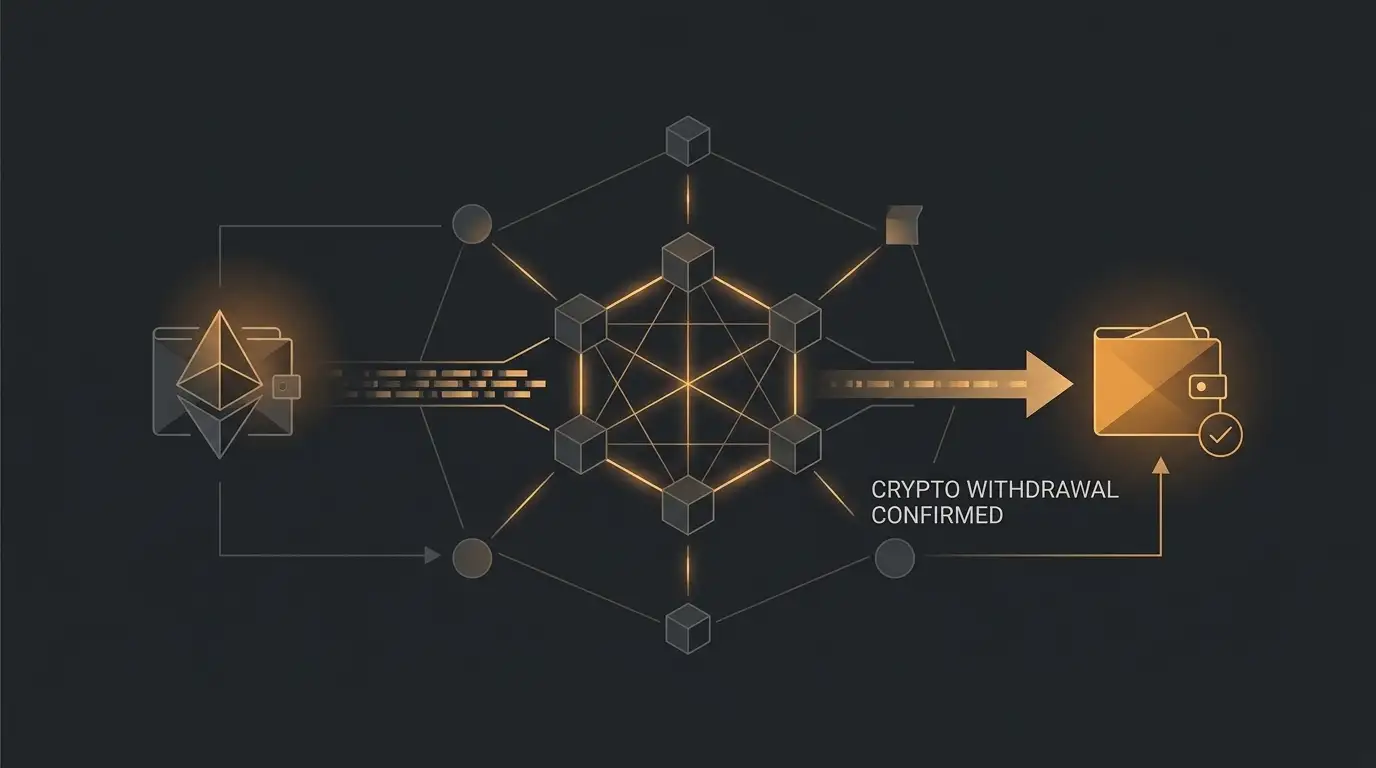
The withdrawal profile is simple, but the network still matters
Flush does not add a platform withdrawal fee; the player pays the blockchain network fee. The minimum withdrawal is described as the network fee only rather than a separate casino-imposed minimum. That structure keeps the cashout rule compact, but it does not make every withdrawal identical because network fees and confirmation conditions vary by asset and chain.
- Casino withdrawal feeNo platform fee
- Minimum withdrawalNetwork fee only
- Observed TRX example48 seconds
- General timing profileNear-instant
The practical sequence starts before you press withdraw. Check the selected coin and network in the cashier, compare them with the receiving wallet, and make sure the destination supports the same chain. The wider Flush payments guide maps the supported assets and networks, while the account guide explains the onboarding model that sits around deposits and cashouts.
A 48-second payout is evidence, not a universal clock
One hands-on TRX withdrawal completed in 48 seconds. Flush withdrawals are generally presented as instant or near-instant, with typical completion described as under two minutes for many coins. The 48-second result still belongs to one transaction on one network, not a universal clock.
| Timing signal | What it shows | How to use it |
|---|---|---|
| 48-second TRX test | A specific cashout completed quickly in hands-on testing | Treat it as an observed example, not a guaranteed target |
| Near-instant withdrawal framing | Multiple sources describe the general process as fast | Expect the casino release stage to be designed for speed |
| Network confirmation stage | The blockchain still controls propagation and confirmations | Allow for variation by chain conditions and wallet policy |
A fast casino release cannot eliminate blockchain congestion, wallet confirmation rules or an address/network mismatch. The most important delay to prevent is the one caused by sending to an incompatible chain.
Casino processing
This is the operator-side step between the withdrawal request and the outgoing blockchain transaction. Flush is consistently described as fast at this stage.
Network propagation
Once broadcast, the transaction competes for confirmation according to the rules and current load of the selected chain.
Wallet crediting
The receiving service may wait for one or more confirmations before showing the funds as spendable, even after the transaction is visible on-chain.
Published caps shape large cashouts more than the minimum does
The published withdrawal caps are $2,500 per day, $5,000 per week and $10,000 per month. Because the published caps can change, check the current cashier limits before planning a large cashout. For ordinary small withdrawals the network fee may be the more relevant constraint; for larger balances, the periodic caps can determine how many separate withdrawal windows are needed.
That makes withdrawal planning a two-part check: first compare the amount you want to move with the current cashier limit, then check the network selected for the actual transfer. The first determines whether the balance may need to be split across withdrawal windows; the second affects the transaction path after release. Keeping those two constraints separate makes a large cashout easier to plan than treating every delay as the same kind of problem.
Daily cap
$2,500
Weekly cap
$5,000
Monthly cap
$10,000
Platform fee
No withdrawal fee; network fee remains payable by the user
A player holding a balance above a period cap should plan around the cap rather than repeatedly resubmitting the same request. This is especially relevant when switching between assets with different fee economics. A low-fee transfer can reduce friction, but choosing a network solely for cost is unsafe if the destination wallet does not support it.
Caps also change how you evaluate a fast withdrawal claim. A transfer can leave the casino quickly and still be constrained by how much may be withdrawn within the current period. For a large balance, the practical completion time is therefore the combination of per-transfer speed and the schedule imposed by the applicable cap. Treat those as separate variables rather than turning one quick transaction into a prediction for the entire balance.
A safer withdrawal routine reduces avoidable delays
Most crypto cashout mistakes are operational rather than mathematical. The same short routine works whether the transfer is small or close to a published cap.
- Open the withdrawal flow and select the exact cryptocurrency you intend to receive.
- Confirm the blockchain network shown in the cashier and match it to the destination wallet.
- Copy the receiving address carefully and check the beginning and end of the string before submitting.
- Review the network fee and the net amount before confirming the transaction.
- After submission, use the transaction identifier to follow the transfer on the relevant blockchain explorer if the wallet has not credited it yet.
- Use a destination that supports the selected coin and network.
- Allow for network-fee changes rather than assuming the previous transfer cost will repeat.
- Keep periodic withdrawal caps in mind for larger balances.
- Do not treat one fast transaction as a guaranteed future payout time.
If you are moving funds after a gaming session, the games overview is useful context for separating game-side variance from payment-side timing. A fast payout system cannot change the volatility of the games themselves.
TRX can be cheap, but compatibility comes before cost
Flush supports BTC, ETH, USDT, USDC, TRX, LTC, DOGE, BNB and POL, with SOL also listed by the brand. Network information associates TRX with TRON, ETH with ERC20, BNB with BEP20, POL with Polygon and SOL with Solana; stablecoins can be available across more than one network. This is why a coin name alone is not enough to complete a safe withdrawal.
TRX is described as the cheapest option in the payment material, with a minimum below $1 tied to network cost. That can make it attractive for small transfers, but the receiving wallet must still support TRON. For stablecoins, the same ticker can exist on multiple chains, so the selected network is part of the destination, not an optional detail.
When two wallet fields look similar, compare both the asset and the chain. “USDT” does not identify whether the transfer is using ERC20, TRC20 or another supported network.
Consider two common cashout situations. In the first, a player withdraws a modest amount to a self-custody wallet on a low-cost network. The network fee may be the main deduction, and the receiving wallet can display the transfer quickly once it sees the transaction. In the second, the destination is a custodial service that waits for additional confirmations. Flush may have already released the transfer, yet the balance can remain pending at the destination. Those are different delays and should not be treated as the same performance issue.
Large cashouts introduce another layer. The reported daily, weekly and monthly caps can spread a balance across several periods. Repeated withdrawals also mean repeated network fees, so the cheapest route is not necessarily the route with the fewest transactions. Planning starts with the applicable cap, then the asset and network, then the receiving wallet’s confirmation policy. That order keeps the practical constraints visible before speed becomes the focus.
Flush withdrawal FAQ
How fast are Flush withdrawals?
Flush withdrawals are generally described as near-instant. One hands-on TRX test completed in 48 seconds, but actual timing can vary with the selected blockchain and the receiving wallet’s confirmation policy.
Does Flush charge a withdrawal fee?
Flush does not add a platform withdrawal fee. The user still pays the relevant blockchain network fee.
What is the minimum Flush withdrawal?
The minimum is described as the network fee only rather than a separate casino minimum. The effective amount therefore depends on the selected asset and network.
Are there Flush withdrawal limits?
Published limits are $2,500 per day, $5,000 per week and $10,000 per month. These limits are reported by a single source, so current cashier terms should be checked before a large withdrawal.
Read next
Fast crypto cashouts still depend on disciplined network selection
Flush has a strong speed profile, supported by near-instant withdrawal descriptions and one 48-second TRX test. The more durable takeaway is structural: there is no added platform withdrawal fee, the minimum is tied to network cost, and larger balances face reported daily, weekly and monthly caps. Speed is useful, but correct network selection remains the step that protects a withdrawal from avoidable failure.
Created by the ”Flush” editorial team.